Privates Institut für Laser-Proktologie seit 2012
Privates Institut für Laser-Proktologie seit 2012
Conditions of the anus and rectum
Bleeding, pain, itching or a lump at the anus – the causes vary, and almost all of them can be treated well.
When something is wrong down there, many people think of hemorrhoids first. Often, however, something else is behind it: a small tear, a thrombosis, a fistula or irritated skin. Here you will find the conditions we treat in our practice every day, briefly explained and with links to detailed information. We make a reliable diagnosis during a short, gentle examination.
49.9%
Hemorrhoids
29.1%
Pilonidal sinus
21%
Anal fissure, anal fistula, perianal thrombosis, skin conditions and more
Share of treatment cases, Q4 2025
Symptom guide
The most common signs and what usually lies behind them. The guide helps you find your bearings – the diagnosis itself is made during your examination.
Usually caused by hemorrhoids or an anal fissure. Even so, bleeding from the anus should always be checked by a doctor.
Typical of an anal fissure – the pain often lingers for minutes to hours afterwards.
Often a perianal thrombosis: it appears overnight and hurts, but is harmless.
At the anus, this points to an anal fistula; in the buttock cleft above the tailbone, to a pilonidal sinus.
Often anal eczema – sometimes the result of a problem in the anal canal, sometimes a skin condition in its own right.
Something that protrudes when you strain suggests enlarged hemorrhoids. If you involuntarily pass wind or stool, weak bowel control may be the cause.
The most common conditions
What characterises each condition and how we treat it, in brief. You will find detailed information on the linked pages (some currently in German only).
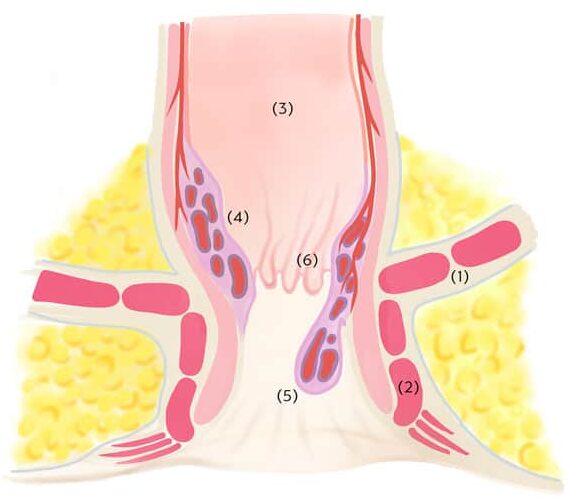
Almost every second case
Everyone has hemorrhoids: cushions of blood vessels that reliably seal the anus. Only when they become enlarged do they cause bleeding, itching, discharge or a feeling of pressure. Depending on the stage, ointments, sclerotherapy, rubber band ligation or gentle laser and radiofrequency procedures can help.
More about hemorrhoids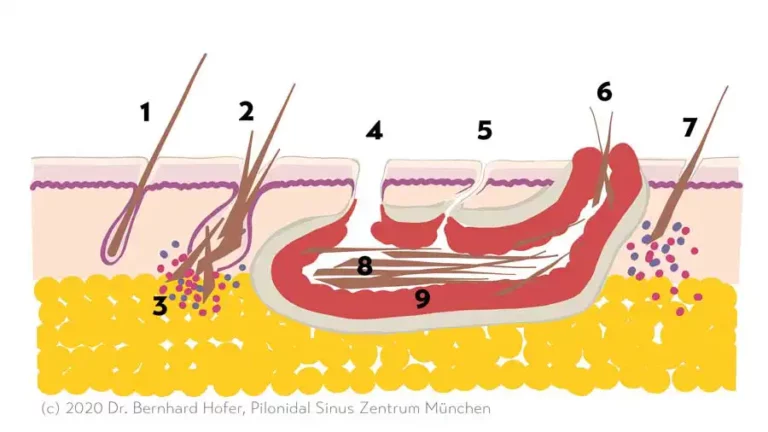
Our specialty
Hairs that work their way into the skin of the buttock cleft cause inflammation, abscesses and draining sinus tracts. We treat it minimally invasively with pit picking and laser – with small wounds and no hospital stay. As of November 2026, we have performed 9,419 pilonidal sinus operations.
Read more (German)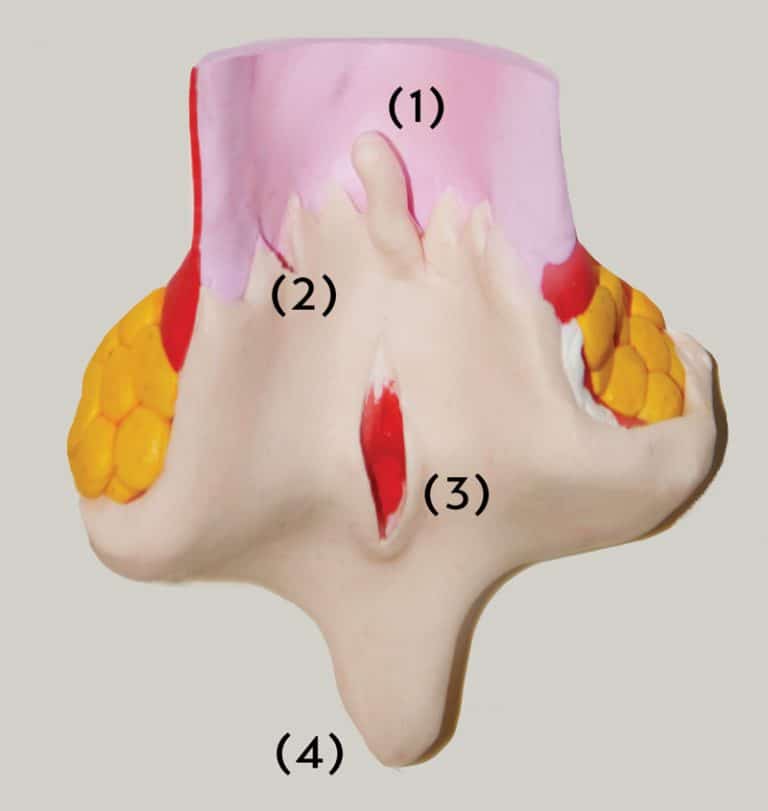
The most common cause of pain during bowel movements
A small tear in the sensitive skin of the anal canal, often caused by hard stool. Acute fissures usually heal with ointments and soft stools. For chronic fissures, a small, gentle procedure such as laser fissurectomy often helps.
Read more (German)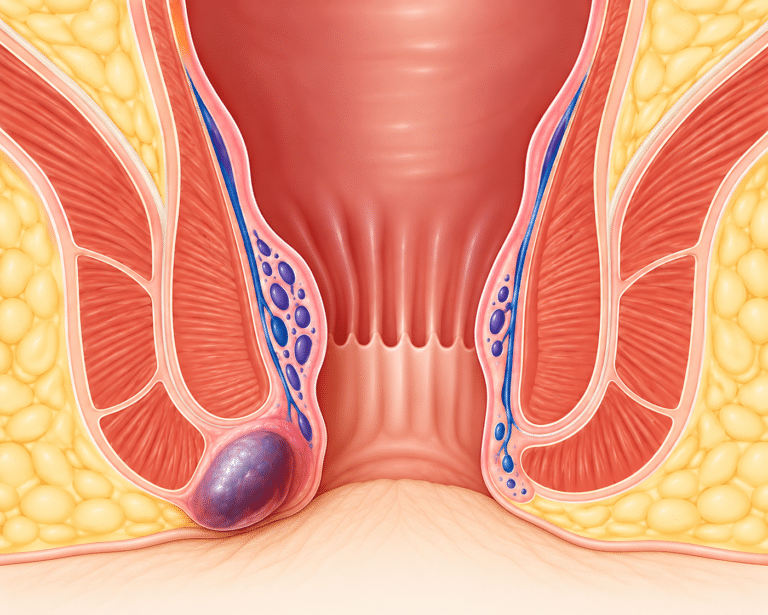
Often mistaken for “external hemorrhoids”
A blood clot in a vein at the edge of the anus forms a firm, bluish lump overnight. It hurts but is not dangerous – unlike a deep vein thrombosis in the leg. Often the best treatment is to let it settle with pain relief.
Read more (German)
Even Louis XIV suffered from it
An inflamed tract between the anal canal and the skin, usually following an anal abscess. Typical signs are discharge, pus or a small opening that does not heal. We operate in a way that spares the sphincter muscle as far as possible, for example with laser or the LIFT procedure.
Read more (German)
It isn’t always hemorrhoids
Skin problems around the anus are often caused by anal eczema. We find out whether the cause lies in the anal canal or whether a skin condition such as psoriasis, a fungal infection or genital warts is present – and treat it accordingly.
Read more (German)Other complaints
Pelvic floor
Few people like to talk about involuntarily passing wind or stool – yet a lot can often be done. After measuring the strength of the sphincter muscle (manometry), we train the pelvic floor, for example on our magnetic field therapy chair: fully clothed and relaxed.
Read more (German)Laser hair removal
Permanent hair removal in the buttock cleft helps prevent a pilonidal sinus and its recurrence. We also use a diode laser to remove bothersome hair if shaving irritates the skin, or for cosmetic reasons.
Read more (German)Good to know
Is it really hemorrhoids? A careful examination helps to find the cause. After talking with you about your medical history, we examine you gently by palpation and by looking into the anal canal with a small scope (proctoscopy). If needed, we add an examination of the rectum (rectoscopy) or an ultrasound. We explain your findings clearly using an anatomical model and discuss the right treatment with you.
Not every condition needs surgery. If a procedure makes sense, we perform it as an outpatient operation – under local anaesthetic in our practice or under general anaesthesia at the Iatros Clinic. You sleep at home.
No referral needed
Takes about 20 minutes
No bowel preparation required
Statutory and private health insurance
Talk to us
Anal and rectal complaints are our everyday work – thousands of patients put their trust in us every year. Book an appointment and we will find the cause discreetly and without rushing.
Book an appointment online