Privates Institut für Laser-Proktologie seit 2012
Privates Institut für Laser-Proktologie seit 2012
Explained: Causes and Symptoms
Talk to our proctologists, Dr. Hofer and Liebl
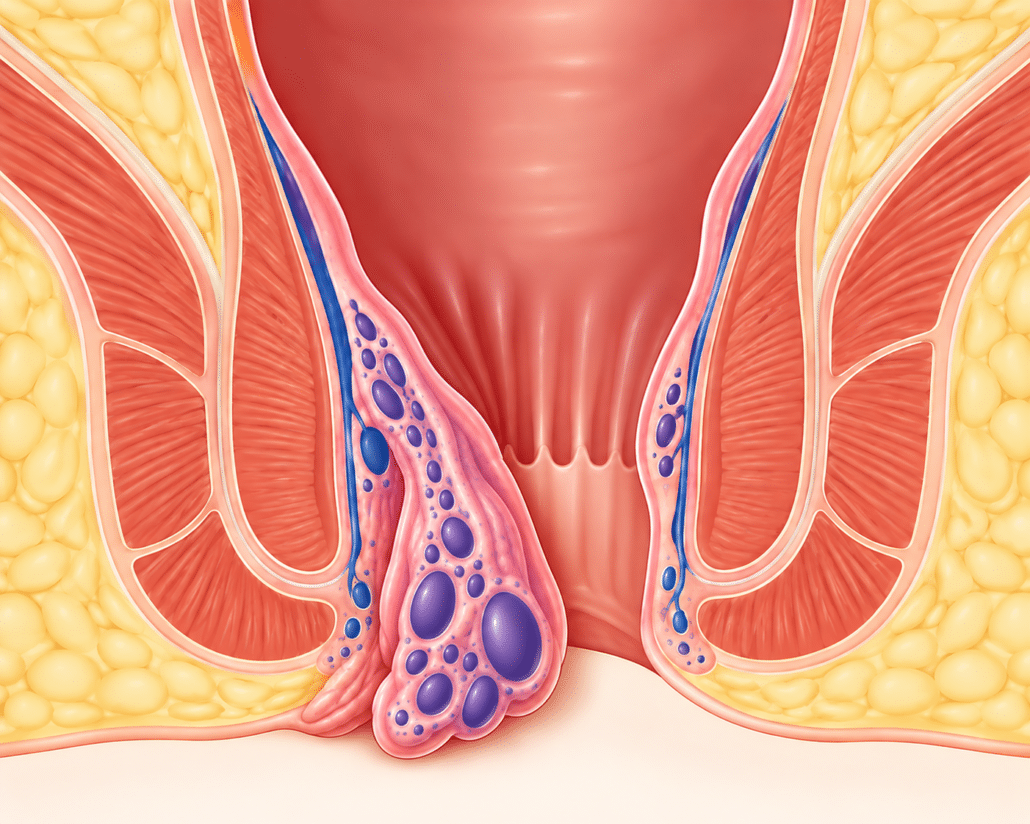
Many people who see a proctologist because of anal discomfort initially suspect hemorrhoids are the cause. Yet very few people realize that hemorrhoids are a completely normal part of our bodies. They are well-vascularized cushions of tissue in the anal canal that, together with the sphincter muscle, ensure the anus closes securely. They are therefore not pathological growths, but rather serve an important function.
Only when these cushions enlarge and cause symptoms do we speak of hemorrhoidal disease. However, not every symptom in the anal area is caused by hemorrhoids. Pain, swelling, bleeding, or itching can have a wide variety of causes. For example, sudden, painful swelling is often caused by anal thrombosis, which is colloquially—and often incorrectly—referred to as “external hemorrhoids.” Severe pain during bowel movements accompanied by traces of bright red blood may indicate an anal fissure. And persistent itching is often a sign of anal eczema, an inflammatory skin condition.
On this page, you’ll learn what hemorrhoids actually are, what functions they serve, and when they cause symptoms. We’ll also explain the role that factors such as straining during bowel movements, chronic constipation, prolonged sitting, possible connective tissue weakness, laxatives, or anal intercourse play in the development of hemorrhoids.
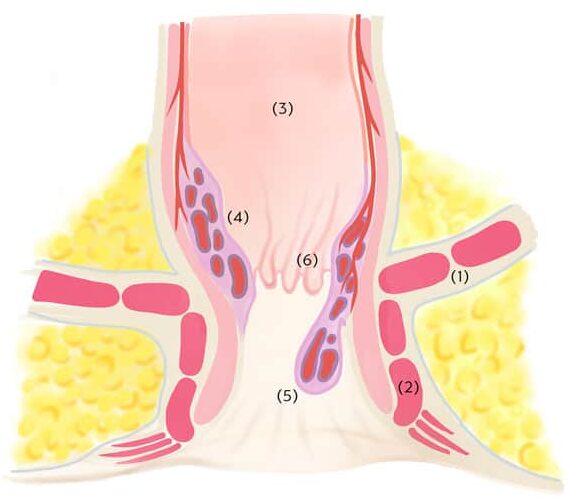
Proctologists define these (also known as hemorrhoids) as ring-shaped erectile tissues located at the level of the sphincter muscle in the rectum (anus), also called the “corpus cavernosus recti.” These well-vascularized vascular cushions derive their name from the Greek words for blood and flow (haíma = blood; rhoos = flow). What an apt term: The blood supply to the rectum and anus is provided by four arteries, whose terminal branches fill the sponge-like blood vessels (sinusoids) inside the hemorrhoids. When the sphincter muscle contracts, the hemorrhoidal plexus fills with blood, thereby creating an air- and fluid-tight seal at the end of the anal canal. When the muscle relaxes, the corpus cavernosum recti empties. Unobstructed passage of stool is ensured. In other words: Hemorrhoids are functional tissue and only become a problem if they permanently enlarge or prolapse outward due to weakened connective tissue (prolapse). Hemorrhoids develop during puberty and are anchored to the muscular intestinal wall by collagen and muscle fibers. The presence of hemorrhoids is therefore a normal condition and not a disease.
Here’s how to tell if you suffer from hemorrhoids
Why does itching occur? Hemorrhoids are located in the transition zone between the rectal mucosa and the normally dry, external skin. As the name suggests, mucosa produces mucus. Enlarged hemorrhoids can act like “a foot in the door,” blocking the sphincter muscle and thus allowing mucus and moisture to pass onto the skin. This results in skin irritation (irritative anal eczema). When the slightly damaged skin loses its barrier function, it becomes more susceptible to intestinal bacteria and digestive enzymes in the stool. The process becomes self-perpetuating.
For this reason, in some skin diseases (psoriasis, atopic dermatitis), isolated lesions are also found on the pre-damaged skin related to the anus.
Blood in the stool is considered a warning sign of colorectal cancer and therefore often causes anxiety. However, the vast majority of bleeding episodes have benign causes. The type of bleeding provides clues about the likely cause: slight traces of bright red blood on toilet paper are often a sign of eczema or enlarged hemorrhoids. An anal fistula or tailbone cyst can also cause such traces of blood. Dripping bleeding is typical of an anal fissure. Blood mixed in with the stool or clotted blood may indicate a source of bleeding in the large intestine. The proctologist will therefore first perform a rectal examination and treat any visible source of bleeding. To be on the safe side, the proctologist will usually order a colonoscopy to rule out any doubts regarding the cause of the bleeding.
A reduction or loss of connective tissue stability can cause a hemorrhoidal nodule to become mobile relative to the sphincter muscle and the muscles of the intestinal wall. The hemorrhoid may then protrude from the rectum during a bowel movement or spontaneously. If such a prolapse retracts on its own, it is classified as Stage II; if it must be pushed back manually, it is classified as Stage III of hemorrhoidal disease. The protrusion of the hemorrhoid disrupts the delicate seal (leading to leakage and soiled underwear) and causes moisture related to the anus. This, in turn, can cause skin irritation (irritative anal eczema) with itching and soreness.
Hemorrhoids are actually a useful component of the so-called continence organ and, in conjunction with the sphincter muscle, ensure a tight seal. If the hemorrhoids enlarge or shift position, this fine continence may be compromised. Patients then complain of moisture leakage or fecal smearing. This symptom is usually unrelated to true sphincter weakness. Often, simply optimizing stool consistency (restoring gut flora, using plant-based bulking agents) is enough to restore normal function. Treatment can then be limited to stabilizing the connective tissue through sclerotherapy.
The sensitive receptors in the rectum cannot always distinguish whether the bowel is full or whether merely enlarged hemorrhoids are causing a feeling of pressure or a sensation of a foreign body in the anal area. Patients then often visit the restroom repeatedly and try to induce a bowel movement by straining harder. In this situation, this is understandably counterproductive, since the increased pressure causes the hemorrhoids to swell further and be pushed downward, thereby intensifying the discomfort even more.
Why Stage IV Isn’t Necessarily Worse Than Stage I
Hemorrhoids are traditionally classified into four stages. But what does this classification actually mean? And does a higher stage automatically mean more severe symptoms or the need for more extensive treatment?
The answer is: No.
A common misconception—even among doctors—is to classify the stages based solely on the size of the hemorrhoids: Stage I as small hemorrhoids, Stage IV as particularly large ones. In fact, however, the classification is based on whether the hemorrhoids protrude from the anus when straining (prolapse) and whether they can subsequently be pushed back on their own, with a finger, or not at all (reposability).
This classification also has its limitations. During a proctological examination, the sphincter muscle is often tense. During a bowel movement, however, the sphincter muscles relax, allowing the hemorrhoids to protrude much more significantly than during the examination. The actual extent of a prolapse therefore cannot always be reliably assessed.
However, something else is even more important: We do not treat stages; we treat people with symptoms.
For example, there are patients with Stage III hemorrhoids whose hemorrhoids protrude daily during bowel movements. They simply push them back while wiping and feel hardly affected by this. Other patients have only Stage I hemorrhoids but suffer from constant fecal soiling, which significantly impairs their quality of life.
That is why what matters to us is not the stage listed on the examination report, but rather which symptoms are actually present and to what extent they interfere with daily life. Staging can help with assessment and treatment planning—but it is no substitute for a thorough examination or a discussion with the patient.
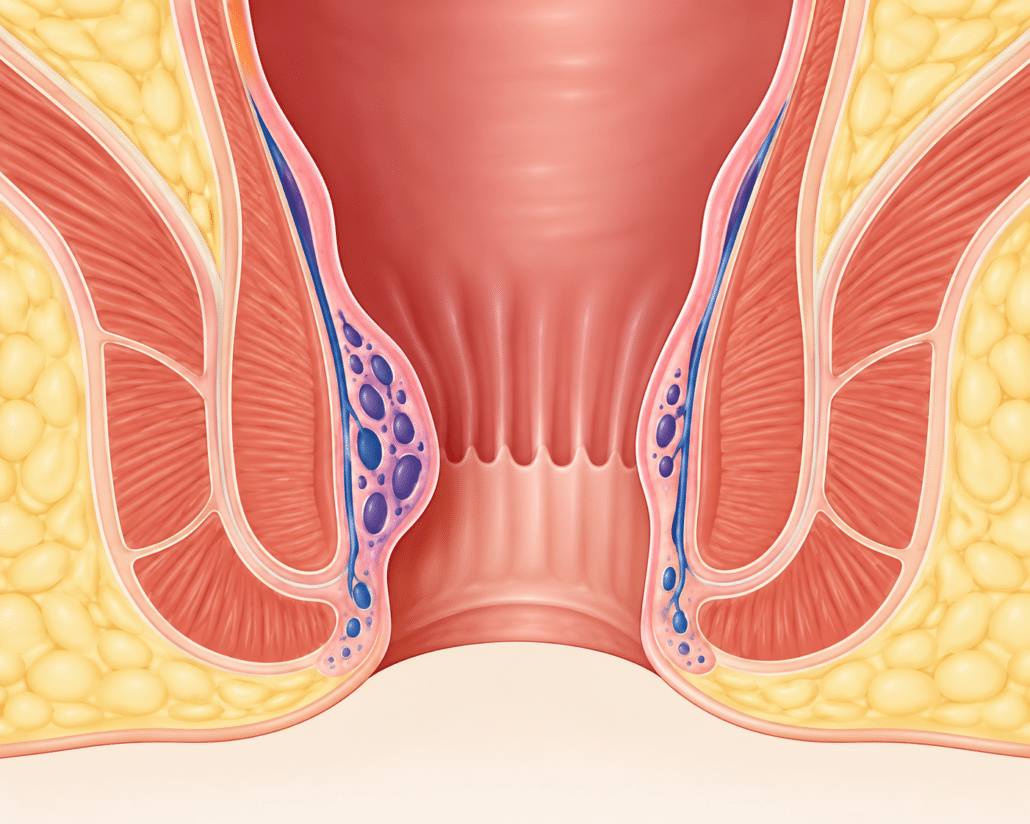
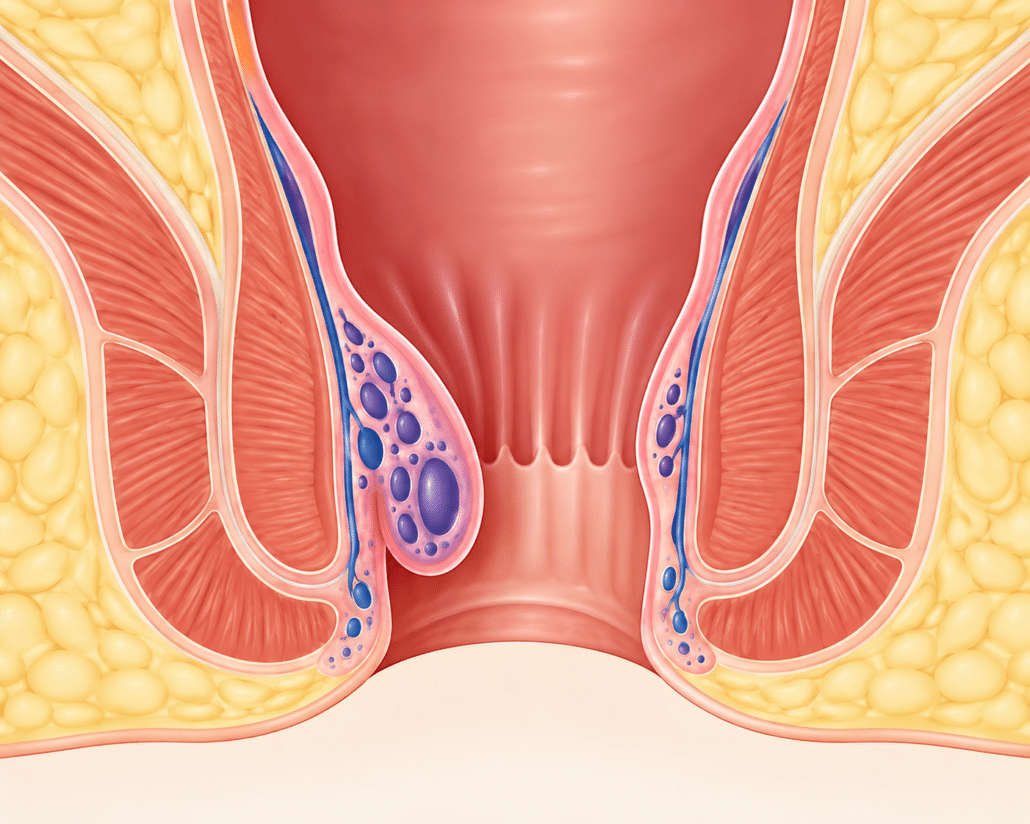
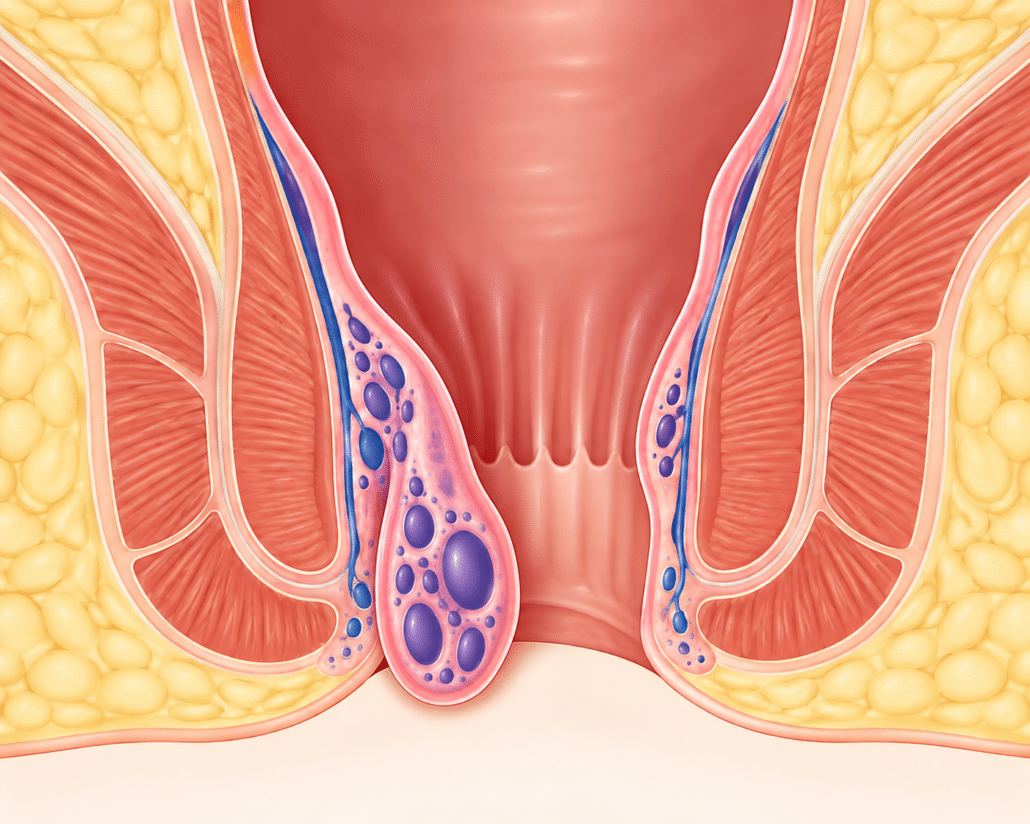
Got it?
Yes, a predisposition to hemorrhoids is at least partially hereditary. A large-scale genetic study involving nearly one million participants identified numerous genetic variants that influence the risk of developing the condition. In particular, hereditary differences in the structure of connective tissue and the function of smooth muscle appear to play a role. These structures are primarily responsible for keeping the hemorrhoidal cushions in their normal position within the anal canal. However, a family history of hemorrhoids does not mean that you will inevitably develop the condition. The development of hemorrhoids is multifactorial—in addition to genetic predisposition, other factors also play a role.
Bowel movements are an active process that requires various muscles to work together perfectly: The rectum and the abdominal muscles generate the necessary pressure, while the anal sphincter and the pelvic floor muscles relax at the same time. Only when this coordination works properly can stool be passed without excessive straining. Dietary fiber naturally facilitates this process. It binds water, increases stool volume, and ensures a softer, more pliable stool consistency. This often makes it easier to empty the bowel without the need for heavy straining. This is particularly important for hemorrhoidal symptoms: Vigorous or prolonged straining increases pressure on the hemorrhoidal cushions and can exacerbate existing symptoms. A high-fiber diet can therefore help facilitate bowel movements and alleviate hemorrhoidal symptoms.
During pregnancy, several changes occur simultaneously that can contribute to hemorrhoids. Pregnancy hormones slow down bowel movements, causing many women to suffer from constipation and requiring them to strain more during bowel movements. At the same time, the growing uterus increases pressure in the pelvis and impedes blood flow away from the hemorrhoidal cushions. Added to this are the increased blood volume and hormone-related changes in the connective tissue. This is why hemorrhoidal symptoms—as well as painful anal thromboses—occur more frequently, especially during the third trimester and after childbirth. The good news: Many of these symptoms resolve on their own after childbirth. Long-term treatment is therefore by no means always necessary.
It has not been scientifically confirmed beyond a doubt whether being overweight alone increases the risk of developing hemorrhoids. Some studies find a link, while others do not. It is possible that it is not so much the extra weight itself as accompanying factors that play a role: A diet low in fiber can contribute to constipation, while a lack of exercise can impair bowel function. Increased abdominal pressure is also discussed as a possible contributing factor. Therefore, it is not body weight alone that is decisive, but rather the ability to have bowel movements as easily as possible without excessive straining.
No, hemorrhoids are not a typical sign of aging. While hemorrhoidal symptoms are particularly common in middle age, they can also affect significantly younger people. Interestingly, epidemiological studies show that the incidence actually decreases again after age 65. This is consistent with our daily experience: Patients of a wide range of ages sit in our waiting room. It appears that the development of hemorrhoids is not determined solely by age, but rather by the interplay of various individual factors.
No, poor hygiene is not a cause of hemorrhoids. On the contrary: Our experience shows that many patients with anal discomfort place particular emphasis on thorough personal hygiene. However, too much hygiene can actually be harmful. Frequent washing with soap, vigorous rubbing, or the use of wet wipes can irritate the sensitive skin around the anus and damage its natural protective barrier. This often makes the itching and burning even worse. It’s not uncommon for this to create a vicious cycle of discomfort and increasingly intense cleansing. Our advice: Less is often more. Clean the anal area as gently as possible with lukewarm water, avoid soap and scented wet wipes, and then gently pat the skin dry.
No, the fear of permanent damage to or tolerance of the bowel caused by laxatives is largely unfounded when they are used properly. The active ingredients commonly used today—macrogol, sodium picosulfate, and bisacodyl—are considered effective and well-tolerated. The German Society for Gastroenterology, Digestive and Metabolic Diseases (DGVS) explicitly recommends them as the first-line treatment for chronic constipation. The German guidelines do not consider a general limitation on the duration of use to be necessary. Even the herbal senna preparations, which were frequently used in the past, are better than their reputation suggests. With long-term use, they can cause a dark discoloration of the colon’s mucous membrane, known as melanosis coli. This is generally harmless and resolves on its own after discontinuing the medication. There is no convincing evidence that normal use causes permanent damage to the intestine. More important than the fundamental question of whether laxatives are harmful is their proper use. The goal should be soft, well-formed stools that can be passed without excessive straining. An excessively high dose, on the other hand, can cause diarrhea, abdominal cramps, and fluid loss. For long-term use, treatment should therefore be tailored to the individual.
Whether anal sex contributes to the development of hemorrhoids has not yet been sufficiently studied scientifically.A clear causal relationship has not been established. Anatomically, it is entirely conceivable that repeated mechanical stretching strains the fine connective tissue and muscle fibers that anchor the hemorrhoidal cushions and the mucosa in the anal canal. However, based on studies to date, it cannot be conclusively determined whether this actually leads to a higher incidence of mucosal or hemorrhoidal prolapse. In our practice, we occasionally observe increased mobility of the anal mucosa—known as an “internal mucosal prolapse”—in patients who engage in anal sex. Markedly enlarged hemorrhoidal cushions are not necessarily the primary finding in these cases. However, this observation does not constitute proof of a causal relationship.
Related Conditions in Proctology
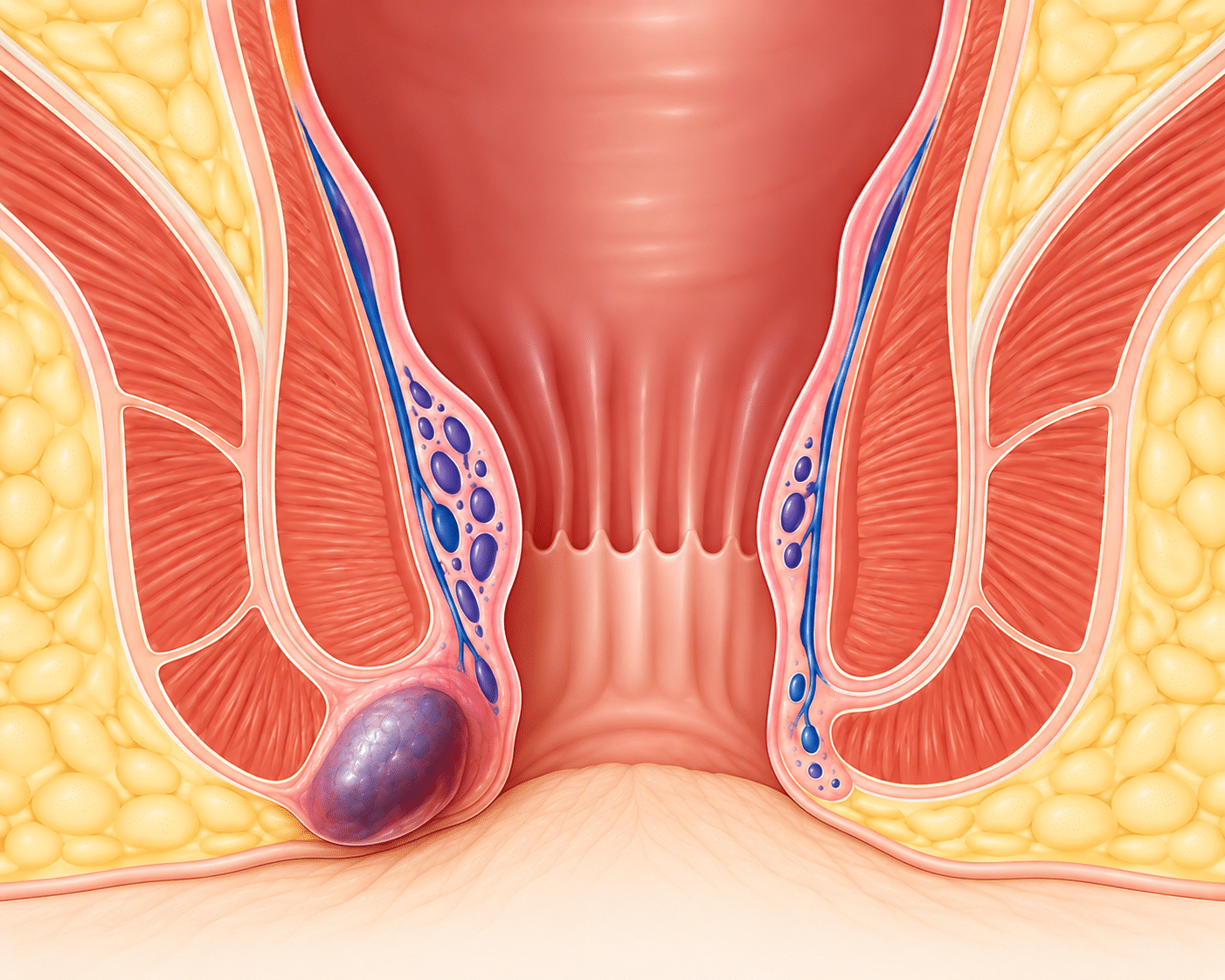
A sudden, often painful lump on the edge of the anus is frequently a anal vein thrombosis. This condition occurs when a blood clot forms in a superficial vein. It is harmless and usually resolves on its own, but it can cause significant discomfort. Learn when treatment is recommended and what can help relieve the symptoms.
Alonso-Coello, P., Mills, E., Heels-Ansdell, D., López-Yarto, M., Zhou, Q., Johanson, J. F., & Guyatt, G. (2006). Fiber for the treatment of hemorrhoids complications: a systematic review and meta-analysis. The American Journal of Gastroenterology, 101(1), 181–188.
Barron, J. (1963). Office ligation of internal hemorrhoids. The American Journal of Surgery, 105, 563–570.
De Marco, S., & Tiso, D. (2021). Lifestyle and Risk Factors in Hemorrhoidal Disease. Frontiers in Surgery, 8, 729166.
Habel, M. A., Leichliter, J. S., Dittus, P. J., Spicknall, I. H., & Aral, S. O. (2018). Heterosexual anal and oral sex in adolescents and adults in the United States, 2011–2015. Sexually Transmitted Diseases, 45(12), 775–782.
Hawkins, A. T., Davis, B. R., Bhama, A. R., Fang, S. H., Dawes, A. J., Feingold, D. L., Lightner, A. L., & Paquette, I. M. (2024). The American Society of Colon and Rectal Surgeons Clinical Practice Guidelines for the Management of Hemorrhoids. Diseases of the Colon & Rectum, 67(5), 614–623.
Johanson, J. F., & Sonnenberg, A. (1990). The prevalence of hemorrhoids and chronic constipation: an epidemiologic study. Gastroenterology, 98(2), 380–386.
Loder, P. B., Kamm, M. A., Nicholls, R. J., & Phillips, R. K. (1994). Haemorrhoids: pathology, pathophysiology and aetiology. British Journal of Surgery, 81(7), 946–954.
Lohsiriwat, V. (2012). Hemorrhoids: from basic pathophysiology to clinical management. World Journal of Gastroenterology, 18(17), 2009–2017.
MacRae, H. M., & McLeod, R. S. (1995). Comparison of hemorrhoidal treatment modalities: a meta-analysis. Diseases of the Colon & Rectum, 38(7), 687–694.
Maierhofer, C. N., Lancaster, K. E., & Turner, A. N. (2018). Anal sex is more common than having a Twitter account in the United States. Sexually Transmitted Diseases, 45(12), 783–785.
Riss, S., Weiser, F. A., Schwameis, K., Riss, T., Mittlböck, M., Steiner, G., & Stift, A. (2012). The prevalence of hemorrhoids in adults. International Journal of Colorectal Disease, 27(2), 215–220.
Stelzner, F. (1964). The corpus cavernosum recti. Diseases of the Colon & Rectum, 7(5), 398–399.
Thomson, W. H. F. (1975). The nature of haemorrhoids. British Journal of Surgery, 62(7), 542–552.
Zheng, T., et al. (2021). Genome-wide analysis of 944,133 individuals provides insights into the etiology of haemorrhoidal disease. Gut, 70(8), 1538–1549.
